Uncategorized

Lets Talk About Medical Trauma…

hello friends. Let’s chat.

Tw – medical negligence

This past week has had me thinking a lot about the impact that having a bad experience with a medical professional/s can have on any future encounters a person has at doctors/ hospitals.

I remembered a poignant tweet I read from @ JackMeraxes – ‘being able to trust your doctor is a really big privilege’ and how this rings true for so many disabled people, for so many reasons.

A very long and short for anyone here for the first time is that my brain disease was misdiagnosed by doctors as a mental breakdown, and upon them then sectioning me for three months, further (big) errors led to me leaving hospital newly disabled with a paralysed lower leg & a brain injury. The reasons that all of this happened were hidden from me for years.

Something I never really talk about, but should, is how since this happened, I cannot go to a hospital appointment without having a severe trauma response. Being inside hospital makes me feel extremely panicky and scared, and I often have sleepless nights and lots of tears if I know I have an appointment- regardless of what it is for.

More than this, when I left hospital in extreme pain this week, my first thoughts of course were that the doctor had done something wrong … or an even harder thought to manage… the doctor hates me because they know I told people about what this hospital did it on purpose …. Sounds silly right? Sounds very self involved and self important? But these thoughts after what happened are so hard to shake.

And it is such a uncomfortable position to be in, and to talk about – because as well as hating what doctors did to me and how this has left me feeling, I am also fully aware of the lack of funding, overworking and understaffing of health care in the country I live.

It is difficult to not feel like a bad person for expressing these emotions and hard to explain to anyone who has not been through anything similar. To be so grateful for our healthcare system and everything it does, but also to have been one of the people that’s life was completely altered and changed forever by malpractice of a select few in the system?

Overall, I feel – confused.

Uncategorized

Let’s Talk Pity Porn.

Hello friends. Let’s have a chat.

Something I’ve been thinking about a lot recently is the way that others want to see disabled people, particularly in relation to inspiration/pity porn.

In my own life, towards the start of my illness and when I was discharged from hospital – people in my personal life were happy to discuss what was happening to me, to share the news, to chat about it over coffee with friends etc.
When I was stuck back in my parents spare room, unable to keep my eyes open, unable to leave the house – it was a great story to share that was bound to get people who heard it to shed a tear or shake their heads and tut along in disbelief.

But what I noticed- as I started to regain ‘Lucy’ and was able to start making my own life choices again, and made my journey down the path I am on today, an unconventional path – social media, reclaiming my sexuality, speaking out loudly and confidently spreading my message wherever I can … these people were no longer accepting and supportive of me. Instead, MY behaviour became the source of the tutting and the head shaking.

It was harder to pity the girl wearing some (rather exquisite) underwear & womping out with messages of being disabled and sexy. Even though my condition hadn’t changed, and everything I’d been through hadn’t disappeared.

Now I heard reports of family members and acquaintances with their judgmental takes on how id turned my life around.

And I wonder – would it make you more comfortable if I was still in that bed? Do i make you uncomfortable because I don’t match the preconceived idea you had in your head of what knowing a disabled person would be like? Can you not proudly tell your friends, around coffee, about the girl you knew who had a brain disease anymore in case they Google me and see me rocking some Ann summers or lovehoney?

Disabled people often have to force our own paths in life, finding work that allows for our conditions and best believe I tried a multitude of jobs, and struggled immensely. I am so lucky to have landed where I have after such a traumatic ride, and even if you cannot be proud of me, I am proud of myself 🙋🏼‍♀️🦓

Encephalitis

Introducing the #InvisibleIllnessSquad

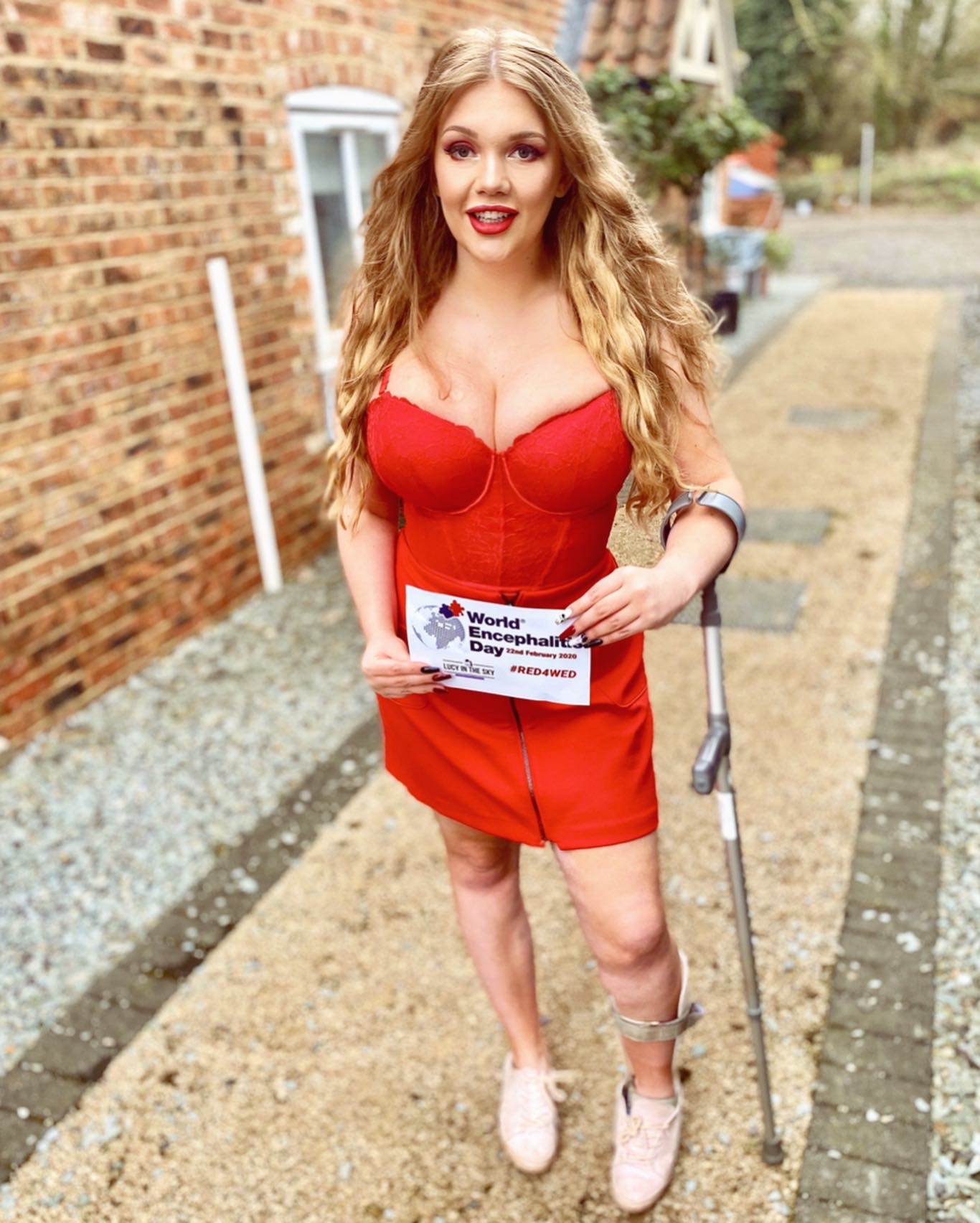
Invisible illness squad?! You must be wondering what on earth I mean… what’s invisible about that plastic thing on my leg? Or the unsightly grey crutch ruining all my outfits??

Its understandable, you may think, that around 40 different Uber drivers have jokingly asked me ‘have you been playing football?’ And if I’m having a good day, I will laugh and say ‘something like that’.

But it wasn’t something like that. It was absolutely nothing like that.

In the same regard, when a male sends an opening message on a dating app, ‘what have you done to your leg?’ Why should I find that annoying? Human curiosity right? I’m sure they’re expecting a reply entailing some heels + alcohol accident, so when I reply ‘brain disease lol,’ I’m not shocked when there is no response.

I didn’t ‘do’ anything to my leg, misdiagnosis and negligence did a hell of a lot to my leg.

It is common for people my age to be looked at with scepticism in regards to their disability or condition – we are often told ‘you’re too young to be sick’ or ‘you’re so glamorous – you don’t look disabled’. And thus we aren’t given the same care and consideration as others in our community. No one ever helps me on to a train, or gives up their seat on the bus for me… because I’ve probably just sprained my ankle or something, right?

When you look at me, you see a visible ailment, you don’t see the acquired brain injury  resultant from Encephalitis and all the problems that it causes me every minute of the day, the trauma, the chronic pain  and the years of fighting I’ve endured inside my own body.

My friend created #invisibleillnesssquad for people like me, who don’t ‘look’ unwell. 💕

Encephalitis

My involvement with World Encephalitis Day (2020)

347ECE4D-121C-4444-B3BA-2D3BAA2CC356Today marks my fourth World Encephalitis Day since being diagnosed with anti Ndma receptor autoimmune encephalitis.

The first, in 2017, to be quite honest I was probably asleep for – recovering from an acquired brain injury is the most strenuous journey you will ever take, and there is no quick way of bouncing back to the person you were before.

For several months after leaving the hospital, the inside of my head was like the static on a tv and I was desperate to turn it off. Being awake was exhausting and my body was no longer my own, I had no clue who I was anymore and if I would ever exist in some sort of normality ever again.

Later that year, I would realise that I had become permanently disabled and my life would change once again.

The second, in 2018, I had just posted my first ever blog about my experiences with encephalitis after being terrified to touch my laptop out of fear or not knowing how to use it – it was here that I met so many amazing people who had also experienced the disease, through various groups and online forums.

My sister, Hannah, encouraged me to keep writing, promising me that one day the things I once knew would come back to me. Using her graphic design talents, she created ‘Lucy in the Sky with Encephalitis.’

This year, my best friend, Brad, also became my social carer, as I had become so detached and overwhelmed by the outside world, and so deeply isolated from reality, stuck only with the confusion and despair in my own head, that I would never leave the house other than for the hundreds of hospital appointments which I faced each week.

Brad helped me to be less afraid of the world. At first I couldn’t stand the noises and all the people around, but with him with me for support, it was like having a third crutch.

By World Encephalitis Day 2019, I had somehow managed to return to university. I was living by myself and it was all I could ever have dreamed of the two years previously… except it wasn’t a dream at all. Returning to uni was countless days spent sobbing into my pillow, wishing that I had stayed in the safe confines of my parents house. Every day I had to face up to the fact that I simply did not know the things that I knew before, and having to admit to myself, ‘Lucy, you’re just not as clever as you used to be. ‘

I struggled to make a single friend as everyone was younger than me and had already formed bonds, and it’s so difficult when youre clearly different to everybody else.

Thankfully, my lecturers would sit for hours at a time, whilst I had break down after break down, and talk me through the chaos.

Although most days my brain wouldn’t function, and words on pages swam around and made me dizzy, somehow, I went on to graduate with a 2:1 in July.

And that brings me to today, Saturday 22nd February 2020, and for the first time, I think I am okay. Dont get me wrong, I still have my moments where I wonder ‘why me?’, and I’m sure along the way I will have many more tears to cry over what has happened – but I’m okay. Although there were numerous times that I told my mum that I wished I had just died on that hospital bed, I am truly so thankful that I didn’t. I now have the most perfect niece, Arya, whose smile makes my heart burst with warmth. My family have supported me through everything and we have all become closer because of the ordeal.

My friendship group has shrunk significantly but the ones who stuck around, Brad, Bex, Becs, Lucy H and Laura will be in my life forever and a situation like this definitely reminds you that it is always quality over quantity.

Overall, I am now at the point where I will no longer spend World Encephalitis Day’s feeling sorry for myself, instead, I will use this day (and all my days), working to raise awareness of Encephalitis, to help stop the level of misdiagnosis and to save lives.

Disability, Encephalitis

I went from being a healthy university student to being incorrectly locked in a mental ward, becoming permanently disabled at age 21

In October 2016, I had just begun my third and final year of university, happily planning my Halloween costume with my housemates, attending freshers’ events and lectures, when suddenly and unexpectedly, my whole life changed forever.

The summer holidays before I had returned to uni, I had been experiencing severe migraines almost every single day, migraines that would paralyse me for the entire day and make me physically sick.

The pain would be unbearable in one side of my head and go down my neck and into my arm and shoulder, I’d take copious amounts of paracetamol and drink gallons of water, but nothing would make them go away. But every single day I would say to myself, ‘you’ve just had a bad night’s sleep’ or ‘it’s all this hot weather’, ‘you’re not drinking enough’ or ‘it’s just that time of the month’. Besides, my best friend Becs had migraines that were so bad that she had to take tablets for them, so I didn’t want to complain and simply trivialised them, even though they were making my life hell.

Around a week into the term, my two housemates noticed that I was extremely depressed and subdued, this was highly out of character for me, as I was always the source of entertainment for all my friends, the fun one, the bubbly one who would attend every event and talk to everyone and anyone. Out of nowhere, I was sleeping all the time and not eating, locking myself away in my bedroom and avoiding social interaction. When I did speak, I told them that I was going to fail my degree and couldn’t do my dissertation, that no one liked me and that I was fat, ugly and would never get a boyfriend. I’d never been one to struggle with education, I’d attended a selective grammar school, got A’s in my A levels and always been top of the class in all subjects, so to suddenly be so negative about my work was a first.

These behaviours worsened throughout the week, and this period is extremely blurred to me. I have no idea how I was walking to and from lectures and seminars, as there was a busy road to cross and I was in some sort of hazed trance, completely unaware of my surroundings. I can recall being sat in lectures with a pen in my hand, desperately struggling to keep my eyes open, nodding off and then being embarrassed that I was falling asleep in a room full of people.

On the morning of October 12th, my housemate and best friend, Becs found me in the early hours of the morning shouting her name, with wild eyes, trembling in my room. She was very concerned as she knew my actions were continuing to worsen and I was not acting like myself. Becs managed to contact my mum, who advised her to call an ambulance – she tried to speak to me on the phone, but I couldn’t speak, other than repeat the same word – or the beginnings of a word repeatedly or giggle manically. When I got to hospital, the doctor told Becs and I that I had suffered a panic attack and sent us home twenty minutes later with some breathing exercises. I think I must have slept for the rest of the day, and by the evening I was apologising to my mum and my sister, telling them that I was just stressed out over university.

I do have vague flashbacks and memories of this period, but the most haunting recollections I have are of being in my university bed, unsure if I was awake or asleep, but hallucinating that I was being chased through a dark forest at night time and constantly falling over, and each time I fell, it was as though I woke up. And each time I woke up, I would reach out for my phone or my laptop, but every time I touched them, they vanished from beneath my fingers and were nowhere to be found.

The next morning everything erupted. Becs found me again at 6am, frantically screaming her name, sat hunched in a ball in the middle of my room, rocking backwards and forwards. The room around me was strewn with my belongings and it was as though I had been possessed. Becs rang my mum immediately and my parents came rushing from Lincolnshire to Leicester. When they arrived, once again I robotically told my dad, ‘I’m fat, I’m ugly, I don’t have a boyfriend, I’m going to fail my degree, nobody likes me.’ My parents questioned my housemates as to whether I had taken any drugs, or if there was the possibility that I had been spiked, as the way I was presenting aligned with both things.

The next thing I remember is a bright light shining into my eye, and then the next three months, all I know is what I can recall from sporadic, haunting flashbacks, my medical records, and the recollections of my family.
On the way to hospital, my behaviour was unexplainable, at one point I even tried to escape from the car as it was moving. This continued in the hospital waiting room, and my mum had to physically sit on top of me to restrain me because I was so wild. By the end of that day, doctors informed my parents that I had suffered a severe mental breakdown and that I needed to be sectioned immediately under the mental health act. It was then up to my mum and dad to work out what could have caused this in their otherwise happy, healthy child.

I think it is important, now that we have reached this part in my story, that I make it completely clear that the diagnosis made by doctors as this stage was completely incorrect. I had no history of mental illness, nor did anyone else in my family. My parents commented to me on how the doctors and nurses seemed at first to look at me as a silly little girl who had perhaps experimented with drugs and had a bad reaction, or maybe my drink had been spiked. These comments were batted around for a moment or two, but then the mental breakdown diagnosis was settled upon.

I wonder now, having studied psychology myself, as well as a whole module at university on Mental disorder and crime, if there were in fact some gendered implications resulting in my diagnosis. It is no secret that mental disorder is generally diagnosed much more commonly in women than males, for example. Furthermore, much of the reading that I have done on the condition that I was experiencing suggests that historically, many women were labelled as insane when their symptoms were the same as mine, long before the illness was recognised. A particularly daunting theory is that the women who were labelled as witches and either stoned, drowned or burnt to death during the Salem witch trials were suffering in the exact same way that I was.

So, what exactly was wrong with me, and potentially these other young women throughout history?
Well, I eventually found out in January 2017, four months after I was sectioned. I must admit, when I first heard the words Anti NDMA Receptor Autoimmune Encephalitis, I had no idea what it meant or what it was. And this isn’t uncommon, 78% of people across the world still have no idea what Encephalitis of any type is despite the fact 500,000 people globally each year are affected by it. Encephalitis is defined as inflammation of the brain and can affect anybody at any age and there are around 6000 cases in the UK per year.

Autoimmune Encephalitis, the type which I had occurs when the immune system mistakes healthy cells in the brain for bad cells and thus begins to attack them – this is known as ‘friendly fire’ – the body thinks it is fixing itself when its actuality it is destroying itself. As the brain becomes inflamed, NDMA receptors become under attack, these NDMA receptors are critical for judgement, perception of reality, human interaction, retrieval and formation of memory and all unconscious activities or autonomic functions such as swallowing and breathing which means that all these things are affected. A common cause for this, particularly in young women in their child bearing years is a type of tumour called a teratoma, which means that one way in which NDMA receptor encephalitis is often diagnosed is by locating a tumour. However, MRI scans and blood tests can also show evidence of this disease and a hospital stay with treatments varying from steroids to chemotherapy are essential.

I must mention once again that I was not in a hospital ward, I was in a psychiatric ward and my condition had been diagnosed as a mental disorder, not a physical disease. The implications of this were that I received none of the treatments that are necessary for curing encephalitis, in fact, instead I was pumped religiously with psychotic drugs for a fictional mental breakdown – because of this, my brain disease was able to progress for three months, meaning that my body effectively began to shut down and die. I became completely catatonic, or in other words, in rigid stupor and the doctors told my mum and dad that basically I was going to die, and they didn’t know why, but as a last-ditch attempt, they could sign papers for me to undergo ECT, or electroshock therapy. I went on to receive three rounds of this and let me make it perfectly clear that by no means is this a treatment for Encephalitis and by no means should it have worked. However, by some miracle, by the third round of shocks, I began to have large seizures which somehow must have shook my brain into resetting. I also note that it was the day of my 21st birthday that I started receiving these therapies.

So, it would be nice if my story had concluded there, a rare brain disease cured by a miraculous therapy that should never have worked – but unfortunately, life is never that straight forward or simple. Unfortunately, after my third round of ECT, I was placed back in my ward bed, with four pillows underneath me meaning that I was as high as the sides of the bed, my body was still catatonic at this stage meaning that I couldn’t feel it. I was left unattended on this bed and had been moved into a ward surrounded with elderly female cancer patients. It was at this moment that I had my next seizure, this time convulsing so much that I fell off the bed and onto an open radiator pipe that was directly next to it. Bearing in mind that this was at the end of November, I’m sure you can imagine how hot the pipe was and being that I was catatonic, I was completely oblivious to this, and being that no one was watching or checking me, a 21 year old girl who was constantly having seizures, having just had ECT, I remained on this radiator pipe – fully complete with no cage or protection round it, until eventually one of the elderly ladies on the ward noticed what was happening and screamed for help.

By the time I was found, it was too late – my parents were given a very dulled down version of events and not shown the burn that I had received, and when my dad questioned why I was shrieking and crying out in pain when I began to come round from my somewhat comatose state he was shrugged off. It wasn’t until later, when I was alert enough to try and mobilise that I became aware that there was something very wrong with my body.

Due to the nature of the disease, I was extremely hazy for a long time after first coming around and I still wasn’t actively thinking or processing anything that was happening. I vaguely remember realising that my left leg and foot were not working when I tried to get out of my bed, but at this point I was so unfamiliar with my own body that I wasn’t sure what was right or wrong anyway. As time went by and my foot continued to hang lifelessly, my parents were told that this was a result of the Encephalitis and that my body just wasn’t fully done waking up yet.

The next two years of my life were undoubtedly the most depressing I have ever experienced, to begin with I couldn’t speak a single word, couldn’t walk a single step, all my memories had vanished, and I could barely recognise anyone that I encountered. I was under house arrest and my parents were scared to leave me on my own in case I had a relapse. For many months I could do nothing other than sleep. Thankfully my grandparents were able to play a massive part in aiding my rehabilitation, my grandpa had been a teacher and would bring down crosswords and games of lexicon for me to attempt every day as a way of reengaging my brain. My favourite singer had always been Elvis Presley and my grandpa even bought every single one of his song books and learnt to play all his songs on the keyboard in the hopes that I would remember them and sing along. My grandparents also started taking me on short walks with the leg splint and crutches that I had progressed onto after having used a Zimmer frame inside the house for a while.

It wasn’t till many months later, in a chance appointment with a locum doctor that I finally got some answers about my leg. I wish I could have captured this doctors face when I explained to her the full story of what had happened to me and showed her the position of the 10 centimetre third degree burn located on my left buttock, she was a rehabilitation specialist who was meant to be talking me through the idea of Botox as a way of reducing pain in my leg, but when I told her about the burn it was as though the penny dropped. She immediately pulled out her phone and began googling all sorts of diagrams to demonstrate to me that the position of my burn was directly in the same place as my sciatic nerve and that she believed that the burn had been so severe that it had burnt through my nerve completely and killed it, thus leaving my left leg paralysed from the knee down.

Suddenly everything started to make sense – for so many months my family and I had been fobbed off with non-reasons and faux explanations with no medical evidence attached to them and were just left to accept the fact that I had entered hospital fully functioning, and left hospital permanently disabled and now, finally, we knew why.

One of the saddest things that I was faced with upon being discharged from hospital was slowly realising what had happened to me and the implications that this would have on my future. For the first months after leaving the ward, I was asleep for a large majority of time and my brain was still far too fuzzy to do any actual thinking. It wasn’t until I was more alert that I realised how many months I had missed out on, and what the implications of this were on my degree. I can remember sitting on my bed upstairs in my parents’ house, where I was now having to live, being cared for 24/7, and watching the Facebook live video of all my course mates, who I’d spent the last two years learning alongside, walking onto the stage and collecting their graduation certificates. As tears streamed down my face, I wondered if I would ever be able to string a sentence together again, let alone write a dissertation worthy of a degree. Writing had always been my talent before I was ill and the idea that I had lost this was devastating.

On top of this, the reason that I had decided to do a criminology degree was so that I could one day join the police, I had picked all my modules so that I could follow this path, and this was my dream. Over time, as I became aware that the condition in my leg was completely permanent, it became very clear to me that I would no longer be chasing criminals down the street. In fact, where my goal was to work with police dogs, I could now no longer even walk my sister’s puppy round the garden.

It was the worry that I would never be able to write again that actually ended up inspiring me do something worthwhile with all the spare time that I now had to recover in. My life was now completely without direction, any plans I ever had were cancelled and there was no longer a life outside my parents’ home.

It was during a tearful conversation with my sister about my worries for the future that she told me to forget about criminology for now and promised me that one day I would write again. To help me, she set up a blog site for me under the name Lucy in the Sky with Encephalitis and created a logo with a zebra in it – the zebra is used in teaching medical students, where they are told ‘ if you hear hoofbeats, think horse, not zebra,’ as in, go down the diagnosis route that seems the most obvious and don’t expect it to be a rare disease. In my case, the doctors heard hoofbeats and thought mental breakdown, when in fact, I was the zebra – with encephalitis.

My sister told me that to start again, I should first write about what I knew best, and there was nothing that I knew better than what had just happened to and was happening to me. And so that’s exactly what I did, I have no idea where the words came from, after I had been terrified to even switch on my laptop for so many months, but somehow, with the keyboard beneath my fingers, the words flew out onto the screen and before I knew it, I had written and published my first blog post.

I was shocked by the amount of support that this received, firstly from my own acquaintances who had wondered where I had vanished for the past months – many of them thinking I had got rid of all my social media accounts to focus on my degree, and others thinking I had fallen out with them. My post spread to a much wider audience as it was shared by The Encephalitis Society and various other encephalitis Facebook groups and soon, I was in touch with many other individuals and families who had experienced the disease. Being a part of these groups made me feel less alone and reminded me that I was lucky to be alive, as stories would regularly be shared of group members passing away as a result of encephalitis.

Over the next months, I continued to write blog posts and although when I look back at them now, they are hardly literary works of art, at the time they were helpful to me and from the comments I received, also helpful to others.

Also, more than this, it was through starting this blog that I eventually gained the courage to return to university and complete my degree. This was the most challenging thing I have ever done, writing essays and dissertations is hard enough for anyone, but for someone who has just learnt to talk and think again, to do it with an acquired brain disease is nigh on impossible. Add to this the fact that I had moved back to Leicester in a studio flat by myself and was still figuring out how to live life with a physical disability, it is safe to say that September 2018-June 2019 was a very tough time.

I can still recall my very first day back at uni, as I was walking to a lecture room that I had frequented years before, completely overwhelmed by the sights and sounds, suddenly a girl stopped me… ‘Lucy?’ she said, and I looked at her completely blankly, absolutely no idea who she was. She explained to me that she had been on my course when I started uni in 2014, and we had been in seminars together for two years, but I had no recollection at all. As I walked to my lecture, tears began pouring down my face, this was exactly what I had dreaded happening… if I couldn’t remember her… what else was I forgetting?

I had become a complete social hermit since my time in hospital, all my friends were well on their way with careers, relationships, houses and the rest and I was very much stunted and behind – I simply couldn’t keep up. And on top of this, I was so psychologically damaged by the trauma of what had happened to me, and the time I’d spent in a psychiatric ward when I myself was not mentally ill had such a damaging impact on my mental state. This meant that in many regards I was terrified to leave the house on my own, my anxiety around crowds of people or lots of noises or bright lights was extremely high and so I would simply avoid ever leaving my bed. Eventually, the University made it so that all my lectures and seminars could be accessed on my laptop, so I never even had to enter the campus.

By some miracle, I managed to graduate with a 2:1, which I’m still not sure how I managed, but it’s something that I will always be extremely proud of.

Overall, the events of late 2016 have altered my life forever, I took for granted the life that I had before and focused too much on trivial things like boy problems and hating my body when really, I had so much to be grateful for. It is such a strange case as one day I was mentally and physically perfectly healthy and then the next I was visibly physically disabled and invisibly physically disabled through the brain injury I had acquired.

This means that now I face all the obvious problems attached to mobility issues, along with chronic pain that I will always have to take medicine for and memory loss, fatigue, cognition issues, slower reactions and irritability from my brain now being somewhat broken. It has taken a long time and a huge struggle for me to get to where I am today and there have been months of tears and wishing I had just died in that hospital bed so that I wouldn’t have to go through many of the awful things that I’ve experienced since, but I have to believe that everything happens for a reason and that I am one of the lucky ones who has a second chance at life, and that any of those who have died from Encephalitis would do anything to have their voice back to spread awareness and make noise about the disease. And so that is exactly what I will do from now on.

The rate of misdiagnosis for Encephalitis has not improved since the 1930s, and the only way that this will get better is if people are better informed about the disease. My greatest aim is that one day, when someone’s friend or family member begins behaving oddly, they will remember the word Encephalitis from that blonde girl with the big hair from Instagram, or that girl who came and droned on and on about it at an event, and they’ll mention it in passing to a doctor, and it may just save a life.

https://www.instagram.com/luuudaw/
Disability, Encephalitis

An honest update..

A lot has changed since I last posted – I’ve come back to university to finish my third year after two years out having suffered a brain disease called anti NDMA receptor encephalitis. I have a much better understanding of what happened to me now, through months of searching for answers.

I was placed in a mental hospital [incorrectly] for three months as doctors assumed I was suffering a mental breakdown and thus filled me with psychotic drugs but gave no treatment to the physical illness (my body’s immune system mistakenly attacked healthy brain cells, leading to inflammation of the brain] that I was experiencing, as it was left undiagnosed.

The disease stops all autoimmune processes and symptoms include impaired memory and cognition, abnormal movements, seizures, and/or problems with balance, speech, or vision. Psychiatric symptoms may include psychosis, aggression, inappropriate sexual behaviours, panic attacks, compulsive behaviours, euphoria or fear. To summarise, I went backwards about 18 years mentally and became clinically insane.

My disease was left so long that my body began to shut down and I began to die, the hospital gave me three rounds of electric shock treatment which induced tonic clonic seizures and eventually brought me back, although now catatonic.

Whilst coming round from my post seizure state, I was left alone in a hospital room on a bed, as I started to come round I fell out of the hospital bed and onto an open radiator pipe. Because I was catatonic I could not feel my own body and was completely unaware of this, so I stayed burning until eventually a member of staff found me. The pipe burnt entirely through my sciatic nerve and left a third degree burn scar over ten centimetres long. This resulted in me becoming paralysed in my left leg… months and years have passed, and I cannot count how many hospitals/doctors/specialists I have visited all of which have stated there is no cure for this.

I am now permanently disabled and in constant agony. The pain is unbearable, and I have tried more pain killers than I even knew existed including morphine, duloxetine, gabapentin etc.

I now wear an orthotic splint and use crutches to get around, but this is still very challenging, tiring and painful. Being back at university has highlighted to me how many short cuts I cannot take because of steps etc.

As well as this, when I was discharged from hospital I could not walk or talk at all let alone type, read, write etc. This means I have had to self-teach myself absolutely everything from scratch, but I am finding life incredibly hard.

Living with acquired brain injury, or to put it more simply a broken brain has affected every part of my life. To name a few examples I relate to the Encephalitis Society website:

  • INFORMATION PROCESSING

“Information processing refers to the ability to think things through, pay attention and concentrate. Attention refers to the ability to focus on one task, to take in information, or to divide attention between tasks. Concentration generally refers to the ability to sustain attention across a period. Individuals affected by encephalitis may have difficulty processing information quickly, which may result in a slowness to answer questions or the need for increased time to complete tasks. It may be difficult to concentrate, with increased distractibility and poor mental stamina across the day. Following encephalitis, it may also be difficult to take in and process information leading to an overload of information and a sense of being overwhelmed by conversation or noise.

  • MEMORY

Confronted with someone who has memory problems following encephalitis, it is very important to remember that not every aspect of memory is affected. Memory can be affected in different ways. It may be difficult to:

  • remember recent events, such as what happened last week, where a belonging was left within the house or conversations
  • follow directions and finding locations
  • learn a new skill, such as lessons at school or how to use a new mobile phone
  • remember events and people from their life before the encephalitis
  • remember what must be done at a future time, such as appointments or paying a bill next week
  • remember people’s names
  • remembering what they have read and following the storyline of a movie
  • LANGUAGE

Many people experience language difficulties following encephalitis such as understanding speech or with expressing themselves. Some people have difficulty finding the right word. It may be evident that the person has problems with speech, in that it lacks fluency or else is fluent but doesn’t seem to make sense. Other people may also find difficult to take in and understand conversations so that an individual experience an overload of information. Others may find it difficult to stick to the topic or ‘monopolise’ conversation.

  • EXECUTIVE FUNCTION

The term ‘executive function’ refers to the high level cognitive skills required to identify and successfully complete goals. This includes abilities such as planning, problem solving, organisation, flexibility in changing a strategy that is not being effective and holding back inappropriate responses. Difficulty in one or all these areas occurs to varying degrees following encephalitis with a significant impact on everyday life and relationships. People may struggle to get to an appointment on time, fail to complete tasks once started or have trouble juggling multiple tasks at work. They appear to be ‘less organised’ than they used to be.

  • INSIGHT

Following encephalitis, an individual may have reduced awareness of their difficulties as a direct result of the brain systems affected. It may be hard for them to recognise changes in their thinking or behaviour and how such changes may affect their return to everyday life, including driving and working. An individual may also understandably find it difficult to accept the impact of the encephalitis and deny that they have any problems. Both reduced insight and denial of problems pose challenges for family members.

  • PROSOPAGNOSIA

Prosopagnosia (or ‘face blindness’) is characterized by severe difficulties in face recognition.  People with the condition cannot recognize the faces of their closest friends and family, and often their own face. The pure form of the condition means people do not have any other difficulties and they can access all their stored knowledge about a person once they know their name. They can also still recognize objects. However, the pure form of prosopagnosia is very rare. Most people who acquire face recognition difficulties experience other cognitive and visual difficulties alongside the condition. This occurs because brain injury tends to affect several brain regions, and face recognition difficulties therefore mostly present as one of several symptoms of brain damage rather than as an isolated condition.

  • CONFABULATION

Confabulation is difficult to describe. At its simplest, confabulation is a problem with a person’s memory. Some people think of it as having ‘false memories’. Someone who is confabulating believes in this memory as if it is real, they genuinely do not realise that what they are remembering did not happen.

This can be difficult to understand. A good way of thinking about it is that all of us from time to time make mistakes in what we remember. Usually we realise our mistake, we have a feeling that it is not quite right. However, when someone had a brain injury, the person stops realising they are making a mistake. 

  • Emotional lability

Following encephalitis, some people may experience uncharacteristic extremes of emotion, which are difficult to control. For example, they may find that they become very tearful more easily without warning or in response to something sad, such as a movie. Others find that they laugh or smile inappropriately, such as when being told a sad story or bad news.

  • Frustration, anger and aggression

Frustration and anger are common following encephalitis. Anger may reflect the direct effect of encephalitis on the brain systems that control emotional responses. For example, following encephalitis a person may have a shorter fuse or/and say/do things without thinking due to changes in frontal brain systems. It can be more difficult to control emotional reactions with an increase in anger outbursts

  • Anxiety

Anxiety and worry may occur after encephalitis. This may reflect the direct effects of encephalitis on the emotional regulatory centres of the brain, such that the sense of threat is amplified or there is difficulty taking on feedback to dampen down an increased sense of anxiety. Anxiety can also be a response to the changes to an individual’s world after encephalitis as a person tried to make sense of cognitive, emotional and behavioural changes and the limitations to everyday life imposed by these changes. Previous coping strategies to manage stress or worry may no longer be available. Some people experience worry and anxiety related to their memory and attention problems as they find it difficult to keep track of plans, what they have done or where they have put things.

  • Depression

Depression is common response to the life changes that occur following encephalitis. Low mood and symptoms of depression may reflect the difficulty of achieving personal goals or a changed ability to take part in their usual activities, including work or social groups. A person may mourn the end of a relationship, the inability to pursue a former active social life or chosen career, or changes to family roles and capabilities. Feeling sad is distinct from the pervasive low mood associated with depression.

  • Impulsivity and disinhibition

Impulsive and disinhibited behaviour can manifest in several ways. The person may appear to lack ‘tact’ after encephalitis.

  • FATIGUE

Fatigue is a common symptom after encephalitis with many patients describing fatigue as being one of most disabling symptoms of their after-effects (acquired brain injury). Fatigue is closely linked to sleep disturbance and other consequences such as cognitive, emotional and behavioural difficulties. Fatigue may be a direct result of injury to the brain or be caused by the increased ‘neurological effort’ required to compensate for lost skills and abilities.

Fatigue after an acquired brain injury (ABI) is different to fatigue due to other causes in that  

  • it has a sudden onset post brain injury
  • it is intense
  • it has more than one component, including cognitive, physical and emotional aspects
  • it can only be ameliorated by mental rest and/or sleep
  • Even activities which are relaxing such as reading a book or watching television can be tiring for a person that experiences neurological fatigue following ABI. Fatigue can have a huge negative impact on overall quality of life and tends to exacerbate other problems. It can result in anxiety, depression, guilt and anger, making return to work/education and participating in social activities sometimes impossible.
  • HEADACHES AND PAIN

Headaches are common following an ABI which may result from encephalitis. We don’t know for sure why it happens. Headache, for example, may happen because of stress and tension, when the person tries to do too much, or may be a sign of anxiety. Cognitive and behavioural functioning of an individual are influenced by pain. Pain is also associated with depression. It is important to notice pain characteristics such as start, duration, location, triggers, as well as any psychological factors and relief indications.

  • SEIZURES/EPILEPSY

Seizures are common during the initial stages of encephalitis, when people are typically quite unwell in hospital. In some instances, they can be quite difficult to bring under control and may need a period in the intensive care unit.

Seizures may also occur at a later stage, well after the acute illness is over. This is because the after effects of the inflammation of the brain in encephalitis may leave the brain cells more likely to produce the bursts of abnormal synchronized activity which cause seizures. When seizures occur in the absence of a precipitating factor (such as the acute infection), they are known as ‘unprovoked seizures.’ Epilepsy is defined as a tendency to experience recurrent unprovoked seizures.

Many patients who go on to develop epilepsy after encephalitis will have had seizures during their acute illness and then continue to have unprovoked seizures after they have recovered. They have evolved from acute symptomatic seizures to epilepsy without any period of freedom from seizures in between. However, others may not have had seizures at all during the acute illness or may have had some seizures which settled, but then go on to have unprovoked seizures (epilepsy) at a later stage after the encephalitis. Although this most commonly occurs within the first year or two after the encephalitis, seizures may begin much later in some people.

I had been so determined and desperate to come back to university and get my degree as I already completed two years of it with strong results but now I’m back I’m finding everything impossible. I can’t concentrate in lectures and find myself nodding off because of the extreme fatigue I’ve been left with as a result of my brain injury. when I get home, I am exhausted and just want to sleep, I’m beyond anxious everywhere I go. i find so many things triggering and have broken down in tears in six of my lectures so far this term.

I stare at the screen on my laptop, but I can’t make my brain function to write anything, I feel like I’m drowning in assignments that I just cannot start.

I don’t want to talk to anyone about it because there’s no way anyone could ever understand, I literally have a broken brain and somehow, I’m expecting myself to get a degree?? but I HAVE to get this degree because it’s all I’ve wanted since I came out of hospital but I’m just finding it so hard…

I have no friends on the course because they’re all already friends so the only time I’m socialising is when my friends from home who have been with me through everything come and visit… this is such a parallel to anything I’ve ever experienced in my life before encephalitis.

I don’t want to join societies or anything because I don’t have the energy to be doing anything more than what I’m doing now and I don’t want to go into university and talk to anyone such as tutors or wellbeing about my problems because having to walk to university as much as I already do is awful because of my chronic pain and also if I speak about anything I can’t stop crying and it’s just a mess.

I’m worried that I have an exam for one of my modules and I’m just going to be sat with a blank page for two hours because I can’t withhold any information

I don’t want to say anything to my mum or dad or sister as they’re already so worried about me coming back to university and it’s not fair on them as they’ve already been dealing with almost losing me. Also, I feel their immediate response may be to get counselling but that’s just not what I want or need.

I can’t take any more time out of my life because I have lost too much already, I must finish this degree but I’m just struggling, and I just really need to see some sort of way that I can get through this…

Lincolnshire

Football from a non-fan perspective.

It’s safe to say that I’ve never exactly been a football fan. In fact, it may be more honest to say that I HATE football; this is something that has been particularly challenging throughout my 21 years as my dad and my big sister LOVE football. Not just ‘love’… adore and not just any football team… Grimsby Town. This has meant years of sitting in silence as the pair of them have their eyes glued to the TV, or Saturday afternoons alone with my mum (who is also not a town fan) as my dad and sister attend every match they can, home and away. Every time my dad’s phone goes off I hear the blaring sound of his Grimsby Town ringtone and at 5.30pm every weekend during the season we wait in anticipation to see whether he will come home in a good or bad mood according to whether town have won or lost.

It’s no surprise, of course, that my dad has been somewhat disappointed that he has only been able to brainwash one of his children and thus has often attempted to get me to attend a town match, something which he had never been successful in. This all changed, however, when I was taken ill with Encephalitis in October of last year and put in hospital for three months, all of which I have no recollection of. My dad visited me regularly during this time and sometimes spent 5 hours sat by my bedside even though I had no idea that he was there. When I began recovering and started speaking again, I asked my dad whether he still went to football matches to which he replied yes. He then asked if I would go to a match with him when I was out of hospital and for some bizarre reason I agreed (bare in mind I was on a  LOT of hard drugs which I think were 100% to blame.)

Along came 18th March and town were at home against Crawley, the big day was here. What had I got myself in to? Thankfully, there was one perk to attending the match – my dad had won a Mariners Trust competition in which the prize was a meal at Mcmenemies before kick-off. So I donned my crutches and made my way up the steps to the restaurant with the help from my dad and his friend Mick Wilbur (an ex Grimsby town apprentice). We were greeted by David Smith, town’s commercial manager who escorted us to our seats and told us that we could sit inside Mcmenemies to watch the match if we wished as the steps in the stand would have been a challenge to me and it was quite a cold day. However, we decided that for me to have the full Grimsby Town experience we would sit in the upper Findus stand in order to absorb the entire atmosphere. We then tucked in to some excellent fish and chips and were joined briefly by ex-town player Dave Boyland who had made a visit to my Grandma’s (also a huge town fan) 90th birthday the previous year.

Next, we made our way to our seats in anticipation of the game starting. Although I can’t remember many individual details, names or moments in the game, I do know that Sam Jones scored for Grimsby and someone else scored for Crawley so the game came to a draw, so I guess I wasn’t the lucky charm that my dad had hoped for. In general it seemed as though Grimsby fans were much livelier than Crawley fans although I don’t know if this was a result of it being a home game. A particular favourite chant of mine was the simple and poignant ‘clap clap clap…fish’. I recognised this one as my big sister, Hannah, has it printed on a t-shirt. As well as this, I noticed that the fans I was sat amongst were nowhere near as rowdy as football fans are depicted to be in the media… although something tells me my dad and his friend were on their best behaviour as a result of my presence.

Whilst I cannot say that I have been converted to football fanaticism, I can appreciate how this is an important hobby to many as it brings people together to support a common cause and ignites a sense of excitement and having something to look forward to. Furthermore, had it not been for Grimsby Town my sister and her fiancé would most likely have never have met and definitely wouldn’t have hit it off like they did and for that I can say that I am nothing but grateful for my dad being an ancient mariner and indoctrinating my sister with black and white from a young age.