In October 2016, I had just begun my third and final year of university, happily planning my Halloween costume with my housemates, attending freshers’ events and lectures, when suddenly and unexpectedly, my whole life changed forever.
The summer holidays before I had returned to uni, I had been experiencing severe migraines almost every single day, migraines that would paralyse me for the entire day and make me physically sick.
The pain would be unbearable in one side of my head and go down my neck and into my arm and shoulder, I’d take copious amounts of paracetamol and drink gallons of water, but nothing would make them go away. But every single day I would say to myself, ‘you’ve just had a bad night’s sleep’ or ‘it’s all this hot weather’, ‘you’re not drinking enough’ or ‘it’s just that time of the month’. Besides, my best friend Becs had migraines that were so bad that she had to take tablets for them, so I didn’t want to complain and simply trivialised them, even though they were making my life hell.
Around a week into the term, my two housemates noticed that I was extremely depressed and subdued, this was highly out of character for me, as I was always the source of entertainment for all my friends, the fun one, the bubbly one who would attend every event and talk to everyone and anyone. Out of nowhere, I was sleeping all the time and not eating, locking myself away in my bedroom and avoiding social interaction. When I did speak, I told them that I was going to fail my degree and couldn’t do my dissertation, that no one liked me and that I was fat, ugly and would never get a boyfriend. I’d never been one to struggle with education, I’d attended a selective grammar school, got A’s in my A levels and always been top of the class in all subjects, so to suddenly be so negative about my work was a first.
These behaviours worsened throughout the week, and this period is extremely blurred to me. I have no idea how I was walking to and from lectures and seminars, as there was a busy road to cross and I was in some sort of hazed trance, completely unaware of my surroundings. I can recall being sat in lectures with a pen in my hand, desperately struggling to keep my eyes open, nodding off and then being embarrassed that I was falling asleep in a room full of people.
On the morning of October 12th, my housemate and best friend, Becs found me in the early hours of the morning shouting her name, with wild eyes, trembling in my room. She was very concerned as she knew my actions were continuing to worsen and I was not acting like myself. Becs managed to contact my mum, who advised her to call an ambulance – she tried to speak to me on the phone, but I couldn’t speak, other than repeat the same word – or the beginnings of a word repeatedly or giggle manically. When I got to hospital, the doctor told Becs and I that I had suffered a panic attack and sent us home twenty minutes later with some breathing exercises. I think I must have slept for the rest of the day, and by the evening I was apologising to my mum and my sister, telling them that I was just stressed out over university.
I do have vague flashbacks and memories of this period, but the most haunting recollections I have are of being in my university bed, unsure if I was awake or asleep, but hallucinating that I was being chased through a dark forest at night time and constantly falling over, and each time I fell, it was as though I woke up. And each time I woke up, I would reach out for my phone or my laptop, but every time I touched them, they vanished from beneath my fingers and were nowhere to be found.
The next morning everything erupted. Becs found me again at 6am, frantically screaming her name, sat hunched in a ball in the middle of my room, rocking backwards and forwards. The room around me was strewn with my belongings and it was as though I had been possessed. Becs rang my mum immediately and my parents came rushing from Lincolnshire to Leicester. When they arrived, once again I robotically told my dad, ‘I’m fat, I’m ugly, I don’t have a boyfriend, I’m going to fail my degree, nobody likes me.’ My parents questioned my housemates as to whether I had taken any drugs, or if there was the possibility that I had been spiked, as the way I was presenting aligned with both things.
The next thing I remember is a bright light shining into my eye, and then the next three months, all I know is what I can recall from sporadic, haunting flashbacks, my medical records, and the recollections of my family.
On the way to hospital, my behaviour was unexplainable, at one point I even tried to escape from the car as it was moving. This continued in the hospital waiting room, and my mum had to physically sit on top of me to restrain me because I was so wild. By the end of that day, doctors informed my parents that I had suffered a severe mental breakdown and that I needed to be sectioned immediately under the mental health act. It was then up to my mum and dad to work out what could have caused this in their otherwise happy, healthy child.
I think it is important, now that we have reached this part in my story, that I make it completely clear that the diagnosis made by doctors as this stage was completely incorrect. I had no history of mental illness, nor did anyone else in my family. My parents commented to me on how the doctors and nurses seemed at first to look at me as a silly little girl who had perhaps experimented with drugs and had a bad reaction, or maybe my drink had been spiked. These comments were batted around for a moment or two, but then the mental breakdown diagnosis was settled upon.
I wonder now, having studied psychology myself, as well as a whole module at university on Mental disorder and crime, if there were in fact some gendered implications resulting in my diagnosis. It is no secret that mental disorder is generally diagnosed much more commonly in women than males, for example. Furthermore, much of the reading that I have done on the condition that I was experiencing suggests that historically, many women were labelled as insane when their symptoms were the same as mine, long before the illness was recognised. A particularly daunting theory is that the women who were labelled as witches and either stoned, drowned or burnt to death during the Salem witch trials were suffering in the exact same way that I was.
So, what exactly was wrong with me, and potentially these other young women throughout history?
Well, I eventually found out in January 2017, four months after I was sectioned. I must admit, when I first heard the words Anti NDMA Receptor Autoimmune Encephalitis, I had no idea what it meant or what it was. And this isn’t uncommon, 78% of people across the world still have no idea what Encephalitis of any type is despite the fact 500,000 people globally each year are affected by it. Encephalitis is defined as inflammation of the brain and can affect anybody at any age and there are around 6000 cases in the UK per year.
Autoimmune Encephalitis, the type which I had occurs when the immune system mistakes healthy cells in the brain for bad cells and thus begins to attack them – this is known as ‘friendly fire’ – the body thinks it is fixing itself when its actuality it is destroying itself. As the brain becomes inflamed, NDMA receptors become under attack, these NDMA receptors are critical for judgement, perception of reality, human interaction, retrieval and formation of memory and all unconscious activities or autonomic functions such as swallowing and breathing which means that all these things are affected. A common cause for this, particularly in young women in their child bearing years is a type of tumour called a teratoma, which means that one way in which NDMA receptor encephalitis is often diagnosed is by locating a tumour. However, MRI scans and blood tests can also show evidence of this disease and a hospital stay with treatments varying from steroids to chemotherapy are essential.
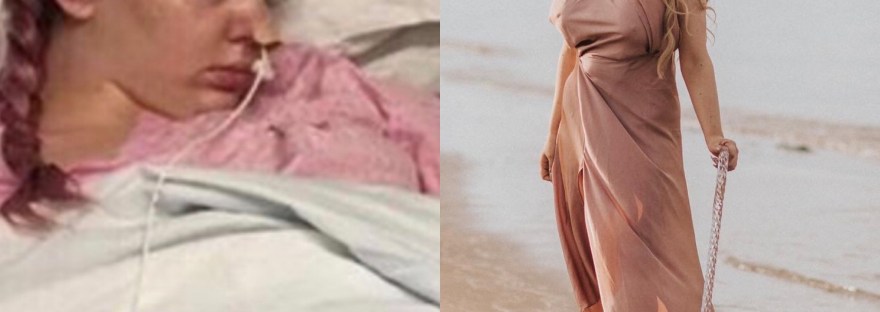
I must mention once again that I was not in a hospital ward, I was in a psychiatric ward and my condition had been diagnosed as a mental disorder, not a physical disease. The implications of this were that I received none of the treatments that are necessary for curing encephalitis, in fact, instead I was pumped religiously with psychotic drugs for a fictional mental breakdown – because of this, my brain disease was able to progress for three months, meaning that my body effectively began to shut down and die. I became completely catatonic, or in other words, in rigid stupor and the doctors told my mum and dad that basically I was going to die, and they didn’t know why, but as a last-ditch attempt, they could sign papers for me to undergo ECT, or electroshock therapy. I went on to receive three rounds of this and let me make it perfectly clear that by no means is this a treatment for Encephalitis and by no means should it have worked. However, by some miracle, by the third round of shocks, I began to have large seizures which somehow must have shook my brain into resetting. I also note that it was the day of my 21st birthday that I started receiving these therapies.
So, it would be nice if my story had concluded there, a rare brain disease cured by a miraculous therapy that should never have worked – but unfortunately, life is never that straight forward or simple. Unfortunately, after my third round of ECT, I was placed back in my ward bed, with four pillows underneath me meaning that I was as high as the sides of the bed, my body was still catatonic at this stage meaning that I couldn’t feel it. I was left unattended on this bed and had been moved into a ward surrounded with elderly female cancer patients. It was at this moment that I had my next seizure, this time convulsing so much that I fell off the bed and onto an open radiator pipe that was directly next to it. Bearing in mind that this was at the end of November, I’m sure you can imagine how hot the pipe was and being that I was catatonic, I was completely oblivious to this, and being that no one was watching or checking me, a 21 year old girl who was constantly having seizures, having just had ECT, I remained on this radiator pipe – fully complete with no cage or protection round it, until eventually one of the elderly ladies on the ward noticed what was happening and screamed for help.
By the time I was found, it was too late – my parents were given a very dulled down version of events and not shown the burn that I had received, and when my dad questioned why I was shrieking and crying out in pain when I began to come round from my somewhat comatose state he was shrugged off. It wasn’t until later, when I was alert enough to try and mobilise that I became aware that there was something very wrong with my body.
Due to the nature of the disease, I was extremely hazy for a long time after first coming around and I still wasn’t actively thinking or processing anything that was happening. I vaguely remember realising that my left leg and foot were not working when I tried to get out of my bed, but at this point I was so unfamiliar with my own body that I wasn’t sure what was right or wrong anyway. As time went by and my foot continued to hang lifelessly, my parents were told that this was a result of the Encephalitis and that my body just wasn’t fully done waking up yet.
The next two years of my life were undoubtedly the most depressing I have ever experienced, to begin with I couldn’t speak a single word, couldn’t walk a single step, all my memories had vanished, and I could barely recognise anyone that I encountered. I was under house arrest and my parents were scared to leave me on my own in case I had a relapse. For many months I could do nothing other than sleep. Thankfully my grandparents were able to play a massive part in aiding my rehabilitation, my grandpa had been a teacher and would bring down crosswords and games of lexicon for me to attempt every day as a way of reengaging my brain. My favourite singer had always been Elvis Presley and my grandpa even bought every single one of his song books and learnt to play all his songs on the keyboard in the hopes that I would remember them and sing along. My grandparents also started taking me on short walks with the leg splint and crutches that I had progressed onto after having used a Zimmer frame inside the house for a while.
It wasn’t till many months later, in a chance appointment with a locum doctor that I finally got some answers about my leg. I wish I could have captured this doctors face when I explained to her the full story of what had happened to me and showed her the position of the 10 centimetre third degree burn located on my left buttock, she was a rehabilitation specialist who was meant to be talking me through the idea of Botox as a way of reducing pain in my leg, but when I told her about the burn it was as though the penny dropped. She immediately pulled out her phone and began googling all sorts of diagrams to demonstrate to me that the position of my burn was directly in the same place as my sciatic nerve and that she believed that the burn had been so severe that it had burnt through my nerve completely and killed it, thus leaving my left leg paralysed from the knee down.
Suddenly everything started to make sense – for so many months my family and I had been fobbed off with non-reasons and faux explanations with no medical evidence attached to them and were just left to accept the fact that I had entered hospital fully functioning, and left hospital permanently disabled and now, finally, we knew why.
One of the saddest things that I was faced with upon being discharged from hospital was slowly realising what had happened to me and the implications that this would have on my future. For the first months after leaving the ward, I was asleep for a large majority of time and my brain was still far too fuzzy to do any actual thinking. It wasn’t until I was more alert that I realised how many months I had missed out on, and what the implications of this were on my degree. I can remember sitting on my bed upstairs in my parents’ house, where I was now having to live, being cared for 24/7, and watching the Facebook live video of all my course mates, who I’d spent the last two years learning alongside, walking onto the stage and collecting their graduation certificates. As tears streamed down my face, I wondered if I would ever be able to string a sentence together again, let alone write a dissertation worthy of a degree. Writing had always been my talent before I was ill and the idea that I had lost this was devastating.
On top of this, the reason that I had decided to do a criminology degree was so that I could one day join the police, I had picked all my modules so that I could follow this path, and this was my dream. Over time, as I became aware that the condition in my leg was completely permanent, it became very clear to me that I would no longer be chasing criminals down the street. In fact, where my goal was to work with police dogs, I could now no longer even walk my sister’s puppy round the garden.
It was the worry that I would never be able to write again that actually ended up inspiring me do something worthwhile with all the spare time that I now had to recover in. My life was now completely without direction, any plans I ever had were cancelled and there was no longer a life outside my parents’ home.
It was during a tearful conversation with my sister about my worries for the future that she told me to forget about criminology for now and promised me that one day I would write again. To help me, she set up a blog site for me under the name Lucy in the Sky with Encephalitis and created a logo with a zebra in it – the zebra is used in teaching medical students, where they are told ‘ if you hear hoofbeats, think horse, not zebra,’ as in, go down the diagnosis route that seems the most obvious and don’t expect it to be a rare disease. In my case, the doctors heard hoofbeats and thought mental breakdown, when in fact, I was the zebra – with encephalitis.
My sister told me that to start again, I should first write about what I knew best, and there was nothing that I knew better than what had just happened to and was happening to me. And so that’s exactly what I did, I have no idea where the words came from, after I had been terrified to even switch on my laptop for so many months, but somehow, with the keyboard beneath my fingers, the words flew out onto the screen and before I knew it, I had written and published my first blog post.
I was shocked by the amount of support that this received, firstly from my own acquaintances who had wondered where I had vanished for the past months – many of them thinking I had got rid of all my social media accounts to focus on my degree, and others thinking I had fallen out with them. My post spread to a much wider audience as it was shared by The Encephalitis Society and various other encephalitis Facebook groups and soon, I was in touch with many other individuals and families who had experienced the disease. Being a part of these groups made me feel less alone and reminded me that I was lucky to be alive, as stories would regularly be shared of group members passing away as a result of encephalitis.
Over the next months, I continued to write blog posts and although when I look back at them now, they are hardly literary works of art, at the time they were helpful to me and from the comments I received, also helpful to others.
Also, more than this, it was through starting this blog that I eventually gained the courage to return to university and complete my degree. This was the most challenging thing I have ever done, writing essays and dissertations is hard enough for anyone, but for someone who has just learnt to talk and think again, to do it with an acquired brain disease is nigh on impossible. Add to this the fact that I had moved back to Leicester in a studio flat by myself and was still figuring out how to live life with a physical disability, it is safe to say that September 2018-June 2019 was a very tough time.
I can still recall my very first day back at uni, as I was walking to a lecture room that I had frequented years before, completely overwhelmed by the sights and sounds, suddenly a girl stopped me… ‘Lucy?’ she said, and I looked at her completely blankly, absolutely no idea who she was. She explained to me that she had been on my course when I started uni in 2014, and we had been in seminars together for two years, but I had no recollection at all. As I walked to my lecture, tears began pouring down my face, this was exactly what I had dreaded happening… if I couldn’t remember her… what else was I forgetting?
I had become a complete social hermit since my time in hospital, all my friends were well on their way with careers, relationships, houses and the rest and I was very much stunted and behind – I simply couldn’t keep up. And on top of this, I was so psychologically damaged by the trauma of what had happened to me, and the time I’d spent in a psychiatric ward when I myself was not mentally ill had such a damaging impact on my mental state. This meant that in many regards I was terrified to leave the house on my own, my anxiety around crowds of people or lots of noises or bright lights was extremely high and so I would simply avoid ever leaving my bed. Eventually, the University made it so that all my lectures and seminars could be accessed on my laptop, so I never even had to enter the campus.
By some miracle, I managed to graduate with a 2:1, which I’m still not sure how I managed, but it’s something that I will always be extremely proud of.
Overall, the events of late 2016 have altered my life forever, I took for granted the life that I had before and focused too much on trivial things like boy problems and hating my body when really, I had so much to be grateful for. It is such a strange case as one day I was mentally and physically perfectly healthy and then the next I was visibly physically disabled and invisibly physically disabled through the brain injury I had acquired.
This means that now I face all the obvious problems attached to mobility issues, along with chronic pain that I will always have to take medicine for and memory loss, fatigue, cognition issues, slower reactions and irritability from my brain now being somewhat broken. It has taken a long time and a huge struggle for me to get to where I am today and there have been months of tears and wishing I had just died in that hospital bed so that I wouldn’t have to go through many of the awful things that I’ve experienced since, but I have to believe that everything happens for a reason and that I am one of the lucky ones who has a second chance at life, and that any of those who have died from Encephalitis would do anything to have their voice back to spread awareness and make noise about the disease. And so that is exactly what I will do from now on.
The rate of misdiagnosis for Encephalitis has not improved since the 1930s, and the only way that this will get better is if people are better informed about the disease. My greatest aim is that one day, when someone’s friend or family member begins behaving oddly, they will remember the word Encephalitis from that blonde girl with the big hair from Instagram, or that girl who came and droned on and on about it at an event, and they’ll mention it in passing to a doctor, and it may just save a life.
https://www.instagram.com/luuudaw/




 Lucy Dawson